Personal

National Day of Civic Hacking: Exploring Consumer Financial Protection Bureau Data

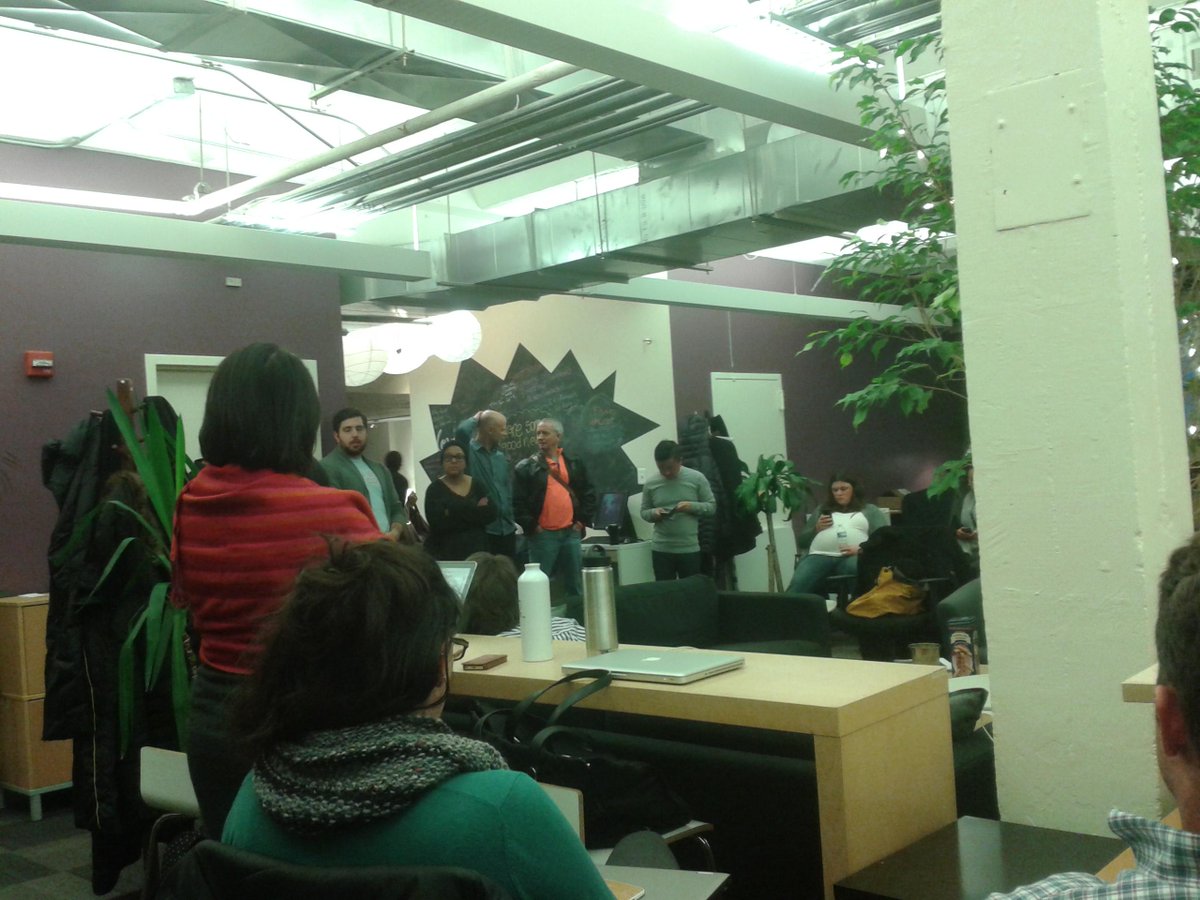
This weekend I participated in the National Day of Civic Hacking.

The project I decided to work on was working with the CFPB data (and also used some census data).

Background

The CFPB released a large complaints database that contained information about what type of financial products people are complaining about. It also gave information about where the complaints came from, what they were complaining about and resolution information. Some of the data was released literally a day earlier. So I was given a chance to take a look at, analyze and visualize information that nobody has really seen yet.

It was an exciting and interesting opportunity. Since it was very fresh data with little to no previous work, much of what I got to do was more general analysis. I created a handful of graphics (click them to see full size) and maps (click to use the map) which I have included below:

What products are people complaining about the most?

The biggest product people are complaining about is mortgage related products. There is a category for other mortgages that people can choose and it seems most people seem to select that. I wasn't sure why until I looked at the issues people were having.

What are the most common issues people have?

Foreclosure, Loan Modification and Collection. Intuitively, this makes a lot of sense. I probably don't care what type of mortgage it is when they are trying to take my house away. This particular issue dwarfed everything else, so I had to use a log scale to even see what the other issues people were facing.

What are the most common issues people have? (log scaled)

This gives a more in-depth picture of the issues, but the first graphic really shows you the most common and/or pressing financial issue for people.

Which companies had the most complaints?

Then I explored which companies were receiving the most complaints. This data is NOT normalized. That means that just because a company has more complaints doesn't make it worse than one with less. For example, if company A had 10 complaints and 100 customers and company B had 5 complaints and 20 customers, company B would be worse (if we measured complaints as a % of customers). I didn't have easy access to a database with any dataset that would normalize these banks, so this is for curiosity more than any meaningful insight. It probably is a proxy for the largest players in consumer finance though.

[MAP] Where are the complaints coming from in the US? (Normalized for state population)

This map shows where people are complaining the most. DC won that dubious honor. Maryland, Delaware, New Hampshire, California and Florida were also high on the list. All the numbers were adjusted to reflect complaints relative to population of a state. So we can clearly see there are differences and we can probably make educated guesses for some of them. DC for example is probably the highest because of the highest awareness of CFPB (since it's based in DC). Maryland probably has a high awareness too. Florida and California had big real estate bubbles and perhaps were hit especially hard. New Hampshire and Delaware are a mystery to me, although a woman from New Hampshire at my event told me that she complained to the CFPB and told all her friends as well. Perhaps an above-average awareness of the CFPB caused the higher complaint rate.

Top 10 Companies by Complaints and their Disputed Resolution Rates

Next I explored disputed resolutions. Companies alert the CFPB when the matter is resolved and consumers are allowed to tell the CFPB they were not satisfied with the resolution. I graphed the top 10 companies by complaint volume and what their disputed resolution rates looked like. It's interesting to see such big differences between companies but without further information about how they handle disputes, it's impossible to say anything confidently comparing one company to another.

[MAP] Disputed Resolutions by State

Finally, I created a map graphing disputed resolutions by state. There was a surprisingly large variation between states. Alaska, for instance, had a disputed resolution rate of over 26% while Wyoming had a measly 16%. I have no idea why, but it's interesting and worth looking into further.

Conclusion

I had a lot of fun exploring this fresh set of data and there is a lot more to be learned from it. I want to give a big thanks to Ana from the CFPB and Logan from the Census Bureau who attended the event and helped participants navigate the data provided their respective organizations.

Reverse Engineering Startup Press: How and Why TechCrunch Covered My Launch

After my startup's launch was covered by TechCrunch I was asked by a lot of people how it happened. People wanted copies of my pitch to learn from. It was as if I had discovered some arcane secret. But I didn't believe that. All I had done was read a couple blog posts from other startups with copies of their pitches (Thanks Jason L. Baptiste, Vinicius Vacanti, Leo Widrich) and one journalist who shared his thoughts (Thanks Sean Blanda). So instead of saying here is the magical way to get press, I wanted to find out what journalists really thought of my pitch and how it could be done better. They receive hundreds of emails from people trying to get their attention and I wanted their advice and expertise. I also wanted to know why the author who covered me on TechCrunch chose to write about me. How did I win the press lottery? In this post, I will share their thoughts and opinions.

Let's begin with the actual pitch:

Subject: Exclusive Story Opportunity: Could Twitter replace review websites?
Hey Eldon,
We talked briefly at TC DC meetup and I showed you a quick demo of my startup: Review Signal.

We're planning to launch on September 25 and you're the first journalist I've reached out to and I'd be happy to give you guys the exclusive on our launch.

What is Review Signal?
Our goal is use the conversations on social media to build a review site and bring a new level of transparency to the (sometimes? often?) shady review industry. We've started with the web hosting industry (probably the shadiest of them all) and plan to expand after launching (we're in data collection mode for a few more niches like domain registrars). At launch, we will be the largest web hosting review site around by at least an order of magnitude (maybe two) with over 100,000 reviews.

We also have a 45 second video explaining how our system works:

http://www.youtube.com/watch?v=VPpwbZWLwJQ

You're welcome to login to our private beta (username: xxx, password: xxx at ).

If you're interested please let me know and I'd be happy to follow up with any information or questions over email or phone.

What happened after I sent this email? I got a response from Klint Finley, who Eric Eldon had forwarded my email to.

Eric forwarded this to me -- I'd love to get the scoop on this. Are you available Friday?

I will skip sharing mundane details because everything of importance was handled over the phone after the first response. I told him about what I was doing and answered some of his questions. And the article came out the day we launched.

What did the journalists think?

The opinion I was most curious to read was Klint's. He is the one who wrote about Review Signal. I was thrilled when he said he would be willing to participate in this article. Please note this is his opinion and his alone. They do not represent the opinion of TechCrunch or any other publication.

Klint Finley

For a startup launch I think pitching to the press is really not all that hard: blogs like TechCrunch and The Next Web are always looking to cover new startups. The important thing is to have something worth writing about. Offering an exclusive always help grab our eye, but it's not always necessary.

The pitches I've seen fail are 'yet another...' for spaces that have long since ceased to be exciting and don't have anything else to sex them up (well known founders, a sizeable investment, a really interesting new spin on the idea...)

If the pitch sounds too much like "It's like Foursquare, but better and built by someone you've never heard of," I don't think that many people are going to pay attention at this point. If you don't have a name or a big investment you've really got to get that differentiation in there early.

I like the "it's like X for Y" type of pitch format, but not everyone does. But telling me "We're an HTML5 mobile app framework with some really advanced features" won't tell me much. Telling me "We're like PhoneGap for building Foursquare-style apps" is going to be a bit more attention grabbing.

The subject line of an e-mail is really important. To be honest, I didn't think your subject line was very good. I probably would have missed that e-mail entirely if Eric hadn't flagged it for me to check out. But once I opened the e-mail and saw that it was about using Twitter sentiment analysis to rank web hosts, I was really interested since web hosting, sentiment analysis and data mining are interests/beats of mine.

Which brings me to the importance of finding the right person for a pitch. This can be hard. Since you think of your company mostly as a b2c company and I write mostly about b2b and dev tech, it might not have been obvious to pitch directly to me. Again, luckily Eric saw it and thought, correctly, that it might be something I'd be interested in.

Some of the pitches I've gotten recently that I wrote about came directly to me and mentioned articles I'd written before. Sometimes I see this stuff and it's totally left-field and vague, like "I see that you once wrote something about 'cloud,' I too am in the cloud business." But sometimes I'll luck out and someone will e-mail me something along the lines of "you once wrote that it would be interesting to see a company doing X... well, that's what we're doing!"

So, in summary: do something awesome, make sure you explain your differentiation, put that in the subject line of your e-mail, and send it to the right person. Easier said than done.

Klint also pointed out that “this would be just one journalist's preference.” So I also decided to get a few more opinions and approached other journalists I've talked to in the past.

Ville Vesterinen and Miikke Kukkosuo, Arctic Startup

Ville:
Was not too bad at all. Nice job! My critic:

1) It's a bit too long. Journos might just skip if it's too many lines to read.

2) I'd answer your headline by 'How:'

Miikka:
I have pretty similar thoughts as Ville.

Headline could be slightly sharper. 'How' is good. Or maybe even something edgier if you can think of something else.

I got a bit lost in the explanation, wasn't too easy to follow it. Depends a lot on the reader I guess how it's received - very big sites like TC might get so many mails that they move on quickly, a bit smaller ones probably would try to make sense of the message even if it takes a bit more time.

I think it would be enough to state the problem&market you're tackling, and why you will rock. Make it easy to read and understand, go straight to the point.
For example:
The review industry is shady. We will change that using social media conversations to bring a new level of transparency. At launch, we will be the largest web hosting review site around by at least an order of magnitude (maybe two) with over 100,000 reviews. Then we'll expand to more niches.

Carl Pierre, InTheCapital

I would take out the Could Twitter replace review websites part and just write exclusive story opportunity, maybe include your name in the subject line too so they remember who you are.

Um...the first part is cool, I would probably avoid mentioning the demo part, just say "we talked briefly at TC DC meetup and you gave me some good points on my new startup, Review Signal."

Then you should probably just say that you talked about providing an exclusive for your launch, and wanted to share the information with them before you go live.

Probably avoid the part that says, What is Review Signal, I would probably skip to something like...

Here is a quick refresher as to what we do:

- bullet point
- bullet point

Trust me, nobody likes slogging through paragraphs for info, especially as a journalist who gets bombarded with pitches constantly. Keep it succinct, short, and with key information in bullet points.

Again, this won't guarantee that you'll get a story, but it should hopefully significantly improve your chances.

From talking to the journalists, the basic recommendation seems to be:

  • Do something interesting
  • Explain why you're different
  • The subject line is your one chance to communicate why someone should care
  • Target the right journalist
  • Explain your idea clearly
  • Keep it short

I have to thank all these journalists for taking the time and participating. I had a great time talking to them and getting feedback about the pitch. I learned a great deal and hopefully this helps others too.

If you have any other tips please feel free to share them in the comments.

Review Signal Launch: Stats, Failures, Successes and Lessons Learned

It's been two weeks since Review Signal launched. The initial excitement of reaching it's first major milestone is over and I finally have a moment to think about how it went.

The Stats:

3,041 Visits
10,163 Pageviews
3.34 Pages per Visit
Average Visit Duration: 2m 16s
Bounce Rate: 5.52%
Visitors from TechCrunch: 727

Failures and Short Comings:

Social Sites - Reddit, HackerNews
It got very little traction in these communities which was disappointing because I thought these were the audiences most likely to appreciate Review Signal. Reddit was a gamble that it would be picked up, it's a huge community and it's hard to balance legitimacy and self-promotion. HackerNews I thought would be more appreciative of the problem I was trying to solve. I got a couple hundred hits and a few comments (15, many of which were my own replies). The commenters brought up some good issues, for example, the hosting recommendation doesn't work well for the HackerNews crowd. There are so many options for hosting that making a good recommendation for advanced users is incredibly hard to do with a simple form.

Contact an Expert Broke
It worked when I tested it, but somewhere between testing it and launch day it stopped working. Not sure how that happened, but it did. Some people will never hear back from me because it didn't save and send their requests for help properly. I am truly sorry about that.

Preparations
I didn't prepare enough for launch day. I had been working towards this day for months and prepared an exhaustive list of things I wanted to accomplish on day 1. I completed maybe 15% of that list. I hit the major ones, but I missed a lot of low hanging fruit which could have helped make a bigger impact. The more human side of it was I got overwhelmed and I vastly underestimated how much I could do on the fly.

Utilizing Other People
I built Review Signal alone, but on launch day I had two friends take the day off and volunteer to help me do things. I say things because I don't think I effectively used their skills. Let me be clear, Zack and Danny are both fantastic people and what happened says nothing about their talents and abilities. I am incredibly lucky to have such amazing friends. I wasn't prepared enough to work with other people on launch day. I had a few vague ideas about what they could do to help but very few concrete things for them to actually do. I definitely didn't have instructions or information to make it easy for them. More planning and better communication would have made a big difference.

What went well:

TechCrunch covered the launch.
That was really exciting and sent a lot of very high quality traffic. The bounce rate was under 2% and people were staying for over 2 minutes. I thought the article did a fantastic job explaining what Review Signal was and the challenges it faces. Some might say it's a vanity metric, the number of people who reached out to me because of the article was incredible. It opened a lot of doors that I am sure would still be closed if I hadn't gotten covered in TC.

Secondary Press

The TechCrunch article also got me covered in The Web Hosting Industry Review (TheWHIR). One of the largest, if not the largest, web hosting magazine. I also had a couple other articles written by smaller startup blogs.

Nginx + Blitz.io

Once I knew I was getting TechCrunch coverage I got worried about how much traffic my server could handle. I setup Nginx as a reverse proxy and cache and it performed like a champ. I had people complimenting how fast the site loaded. As far as I can tell the server never blinked. It peaked at 60 active users according to Google Analytics. I tested my site constantly with Blitz.io which allowed me to test up to 300 concurrent users for free. The site was struggling under Apache with that load, but once I got Nginx in front of Apache, all my concerns faded away. I couldn't generate enough concurrent users to see where Nginx would actually start to slow down.

Lessons Learned and how I would do it next time

Preparations
The most time consuming thing on launch day was crafting messages. Coming up with post titles, writing emails, IM'ing friends, and all sorts of other messages. Almost all of that could have been done before hand. I could have drafted emails, I could have written a few templates for IMs and message boards. I had the stories I wanted to use crafted but they weren't ready to simply copy+paste into messages. Each message also required some degree of personalization because nobody likes spam emails. Next time, I will have everything 1 click away from sending for launch day.

Test Everything. Again. And Again.

I should have done more thorough testing. I especially needed to make sure that the contact points with customers functioned properly. I got a lot of emails reaching out to me on launch day, but I missed quite a few hosting recommendations. The hosting recommendations probably had the highest potential value of any visitor to my site, and I lost all of them. Fail.

Paid Press Releases

I used PRWeb and their analytics tell me I got 15508 impressions and 221 reads. I have no idea what or where those impression numbers come from or how they are calculated. PRWeb sent 83 visitors which had the lowest stats of any referrer in terms of bounce rate, pages/visit and visit duration. But, that got syndicated across a bunch of websites like Yahoo. If the goal is strictly to get press, it was a waste of money. From an SEO standpoint, I don't know and it's incredibly hard to measure the value of the release.

If you have any ideas, questions or feedback I would be happy to hear it. You might also enjoy my previous project's launch story: Gift Lizard Launch: Stats, Failures, Successes and Lessons Learned.

Imagining a Better Review Site

Posted in

Originally posted on the Review Signal Blog

I was a pretty unsatisfied consumer. There are so many review sites and so few that I actually trust. Other than my few trusted review sites which covered very specific topics, I was lost and confused about who to trust for information. Asking friends only went so far and people often give conflicting opinions. I searched what a lot of people were saying but there was no easy way to find any sort of consensus. There were always questions, and I often felt like I didn't have enough information to make a good decision.

It was a year and a half ago, I had just finished my Master's thesis about using Twitter data to predict box office sales for movies based on word of mouth. Then, it occurred to me, we don't write reviews, we talk with friends. Reviews are embedded into our every day conversations, and every single person on earth does it. We talk about what we like and dislike but it doesn't happen to be written in 'review' format. What if I could collect that data and make sense of it all?

I am proud to introduce Review Signal: a new kind of review site based on what people really think.

Our goals are simple:

  • Be transparent about where each opinion comes from and source it to the original location

  • Define very clearly how things are rated in an easy to understand way

Review Signal has been launched covering our first market: web hosting reviews. We've gathered a list of some of the most popular web hosting companies and collected over 50,000 opinions expressed about them. We've analyzed them and even broken down some important and hard-to-measure values such as how satisfied people are with the support offered by a company.

Visit Web Hosting Reviews at Review Signal

Web hosting is just the start. We would love to review everything, but we're also realistic about what we can do and how fast we can do it.  We will expand to other niches as fast as we can while still maintaining our strict quality standards.  If there is some market you're unhappy with and think we can make a difference, we would love to hear from you!  We also look forward to any and all feedback, suggestions, ideas and criticisms.  Contact us.

Thank You

Posted in

I launched my startup today, Review Signal (You can read about it here if you're curious). I wanted to take a moment to reflect on the past 19 months of my life that it took to get to this point.

Although Review Signal is a one man operation, I didn't do it alone and couldn't have done it alone. There has been a huge cast of people who have helped me along the way.

Mom, it wouldn't be right to start the list off with anyone but you. Thank you. You've always been my biggest supporter and wouldn't have made it here with you and your support.

Dad and Cheryl, you guys have supported me too and helped me with a lot of issues over the past two years. It still impresses me that with no programming experience your logic can help me design and improve my systems.

JR, my designer extraordinaire. Your ability to capture an idea, refine it and design it is inspiring.

Mike St. John, you've mentored me and continue to do so. You're always there when something goes wrong and don't hesitate to step in and help in an emergency. I can't thank you enough for your help.

The Nerd Herd at Affinity Lab: Sam, Raphael, Sean, Mike, Dan, Andy, Chris (and ex-herder Lin), thank you for the constant help and feedback day in and day out.

Kira, thank you for your invaluable help with PR.

The rest of my Affinity Lab family, thank you. You guys keep me going.

Nico Garcia, you designed our first logo, for a brand name that ultimately didn't pan out (Mention). I really loved it too.

Monique Priestley and Jordan Gibbens, the ball would not have started rolling without you. Thank you for your help at the very beginning.
Daniel Kleinman, my partner is silly projects and learning new technologies. Thanks for you constant help and feedback.

Last but not least, Zack, my oldest and best friend. Who took a day off from work to help me launch. You've always been there for me no matter what.

And if I've forgotten anyone I am truly sorry, there have been so many wonderful people who have helped me out along the way. Thank you.

NASA Space Shuttle Discovery Flys over Washington DC (Photos)

Posted in

I took these from The Kennedy Center Rooftop.

Space Shuttle Discovery Flys over Washington DC

Space Shuttle Discovery Flys over Washington DC

Space Shuttle Discovery Flys over Washington DC

Space Shuttle Discovery Flys over Washington DC

Space Shuttle Discovery Flys over Washington DC

Space Shuttle Discovery Flys over Washington DC

Space Shuttle Discovery Flys over Washington DC

Space Shuttle Discovery Flys over Washington DC

Space Shuttle Discovery Flys over Washington DC

Creative Commons License
This work by Kevin Ohashi is licensed under a Creative Commons Attribution-NoDerivs 3.0 Unported License.

High Res Photos from Laboratory for Autonomous Systems Research (LASR) at the Navy Research Laboratory

Posted in

Here is a small sampling of high res photos from the Navy Research Laboratory's brand new Laboratory for Autonomous Systems Research (LASR).

All Photos taken April 2, 2012.

Click on a photo to see high res version.


Creative Commons License
This work is licensed under a Creative Commons Attribution-NonCommercial-ShareAlike 3.0 Unported License.

Gift Lizard - One Week After Launch: Stats, Failures, Successes and Lessons Learned

What is Gift Lizard? It's a gift shopping site where you describe the person you want to buy a gift for using tags. It helps you discover interesting and awesome gift ideas.

First Off, The Numbers for Gift Lizard

11,870 Visits (11,509 Uniques)

15,984 Pageviews (1.35/visit)

24 Seconds Average Time on Site

89.20% Bounce Rate

96.96% New Visitors

75% US Traffic

54.60% Chrome / 34.03 % Firefox / 3.89% Safari / 1.83% Internet Explorer

Failures

Facebook

Fail. I did, so can you. I created a Gift Lizard fanpage and invited my friends. I got maybe 4 likes from messaging ~600 people? My facebook status did better and got 15 likes and 12 comments, 2 shares and someone posted it back to me. Not bad, but total facebook traffic for the week: 105 visitors, almost all from the status. Fanpage is probably a more long term benefit.

Twitter
I know some traffic came from here, but it doesn't actually show up on my logs once. Nothing big enough to notice any substantial traffic coming from the 12 or so tweets broadcasting the site.

Reddit Advertising
It's only run for 1 day and there has been no a/b testing. I am still running this ad with the copy:

“Gift Shopping Made Easy! Describe the recipient and instantly get gift suggestions tailored just for them.”

It generated 44 clicks of 71,551 impressions on 26,877 different users. However, those users had 1 minute 54 seconds average time on site and only a 37.14% bounce rate. Better users, incredibly small volume. I also got some fantastic feedback from one particular user about some ways to improve the site that I was unfamiliar with.

MVP Launch

I launched with an MVP (minimum viable product) and there is a lot of things people didn't like (and still don't like!). The interface isn't as good as it could/should be to make it clear how the site works with tagging. There are still bugs in the way it behaves and improvements I know I should be making. But the site does function and I fixed major problems as the came along as best as I could. Other more structural problems are still there and probably won't be solved before the end of the holiday season.

Those are some of the biggest failures and problems I ran into when launching.

Successes

Finding a marketing strategy that works and can be replicated is hard. But I think I've found one.

My original plan of finding 'good' gifts and tagging them across multiple categories was well meaning but it was/is highly subjective and hard to scale. I will still add gifts in targeted popular categories, but that's not where I will spend most of my time.

I realized that niches were far more engaged in their very specific interests and more likely to interact with something targeted than a blanket message about finding gifts.

To that end I tested my idea with a starcraft gifts page and posted it to starcraft subreddit. The thread received around 99 comments (about half were me responding). I engaged them in a constructive and inclusive manner adding any item they thought would make a good addition. It's also important not to be greedy, I want people to find good gifts and share it with their friends of similar interest (funnily enough some of the people's sites I linked also responded on the thread thanking me for promoting their products - and I was genuinely happy to to it!). The goal is creating a great collection of gifts for anyone who likes starcraft regardless of what site the product may be on or what type of relationship I have with that site. It was a HUGE success. The result was 10,494 visits this week to the starcraft page and I only posted it 3 days ago (so it's only 2 days worth of stats).

Fluke or repeatable?

The next day I decided let me try it for another niche and see if I can get a similar response. I created a World of Warcraft gift page and posted it to the WoW subreddit. The result was 1,143 visits to the WoW gift page. The article was more popular in terms of relative ranking (peaking at 5th versus around 12th for starcraft post) but the subreddit is a lot less active it would seem. The engagement was a lot lower, despite being only half the size, it received 10% the traffic volume. The gift collection was still relatively popular in its niche. Success! And it looks like the model is repeatable and possibly scalable.

This massive influx of traffic from one social media site was nice. A secondary effect was linking and stumbles (I got no facebook likes or tweets from these it would seem).

StumbleUpon generated 134 visitors though from one person stumbling the page and setting off a chain of stumbles presumably. Content was sticky enough to be shared and promoted. Success!

Someone even bought me 1 month of reddit gold for the starcraft gift page (thanks anonymous stranger <3)

Finally, email lists worked well. I am on a couple mailing lists and sent a message out to them, the more personal and connected you are and/or your message are, the better it worked out. My co-working space had an amazing response. I saw people browsing it all day and they would come up to me and give feedback (and even bought a few things! <3 Affinity Lab)

Lessons Learned:

  • Easier to connect with a niche audience.
  • Don't be greedy and help others, it makes people like you.
  • Launch it and fix it on the fly.
  • Just because it's not perfect or even great doesn't take too much away if you have great content/value.
  • Google Analytics is mesmerizing (that's going to have to be another post!)

What I would do differently:

Facebook Event in conjunction with a facebook page. I would like to try creating an event and invite everyone to it announcing the launch. Events are stickier I think because the user has to either acknowledge it to remove it or ignore it for a long time while it shows up. Of course the risk is you may only get one chance with this strategy because users may ignore event invites from you. High risk, high reward. I'd choose who I sent the event invite to carefully.

Link directly on social media sites, it may seem like a less popular idea, but I posted to a few subreddits as comments to get feedback (design_critiques, startups, twoxchromosomes) and it generated very little interest or traffic. I think direct links, when possible, are a better idea if you can communicate effectively in the short title.

Happy to hear thoughts, feedback, questions, ideas, your stories or anything else you wish to share!

Launched: Gift Lizard - Gift Shopping Done Right

Posted in

Yesterday I launched http://www.GiftLizard.com

Gift Lizard let's you describe the person you are shopping for and it makes recommendations based
your description. It's a more natural and free way to search for gifts because you don't need
to know what you want to buy for them but can get customized suggestions for the giftee.

The story behind the idea is kind of interesting. I was at Startup Weekend a couple weeks ago
and I didn't join a group on the first night. I went home after a long night at the bar and woke
up before my alarm clock with this idea in my head. It was a unique experience waking up with an
idea stuck in my head (and being up at 6am without an alarm going off).

So I quickly wrote it down on my idea pad and went back to the event. I started designing a mockup.

I showed a few people and we decided to work on it as our weekend project.

The final result was interesting, but it wasn't exactly what I had imagined. I didn't think much
about it for the next week or so. But eventually I realized I couldn't let it go. I had to build
my vision out or I wouldn't be satisfied that I had at least tried.

So yesterday, I launched Gift Lizard.

Natural Language Processing (Comic)

A stressful day trying to work with NLP leads to things like this.

Natural Language Processing Comic by Kevin Ohashi

Syndicate content